As the autumn pageant season winds down, the temperature can be heating up subsequent month in Durban, South Africa, the place the seventeenth Durban FilmMart takes place from Oct. 9 – 12. This yr’s occasion arrives amid surging hopes however lingering anxieties for an African trade at a crossroads.
For the continent’s filmmakers, there’s loads of trigger for optimism. Lengthy marginalized or pigeonholed by pageant programmers, African cinema has achieved an simple foothold in the principle programming strands of A-class fests. Established auteurs are often joined on the pink carpet by a rambunctious cohort of newcomers who’re pushing African filmmaking in new and exhilarating instructions, equivalent to South African administrators Jason Jacobs and Devon Delmar, the duo behind final yr’s Rotterdam-winning docudrama “Variations on a Theme.”
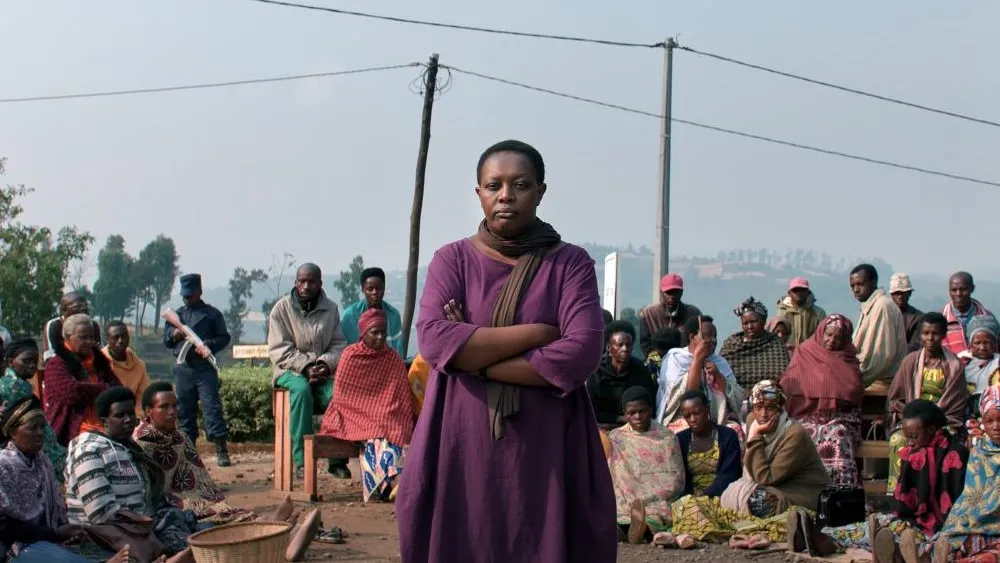
The expertise pipeline has by no means been so wealthy and diversified. Witness Rwandan debutante Marie-Clémentine Dusabejambo taking residence the Caméra d’Or in Cannes along with her searing post-genocide drama “Ben’Imana” (pictured), or Nigerian administrators Arie and Chuko Esiri hitting the Croisette with “Clarissa,” a Lagos-set adaptation of Virginia Woolf’s “Mrs. Dalloway,” starring Sophie Okonedo, David Oyelowo and Ayo Edebiri, that was swooped on by Neon. Venice gave its prize for greatest first characteristic to Cameroon’s Auguste Bernard Kouemo Yanghu (“Home of the Wind”). Based mostly on expertise alone, the long run appears to be like undeniably vibrant.
Extra encouraging than the northbound stream of movies from the World South is the truth that financing isn’t solely flowing in the other way. Whereas African movie manufacturing was lengthy underwritten by European funding our bodies and cultural establishments, a rash of homegrown financing instruments has begun to emerge, from institutional heavyweights just like the Subsequent Narrative Africa Fund and CANEX Creations Inc. — the IP funding arm of the African Export-Import Financial institution — to fairness traders like MBO Capital, Volition Capital and Capital Movie Productions.
“For the primary time within the historical past of African movie, there are a selection of fairness gamers who’re investing in movie,” says Large World Cinema CEO Steven Markovitz, who alongside the African inventive sector-focused HEVA Fund lately spearheaded the inaugural African Movie Investor Roundtable, gathering high traders and financiers of the continent’s inventive industries.
To bolster that time, Markovitz says he’s witnessed a “essential mass of fairness traders” coming into the market, forking out anyplace from $100,000 to $3 million per undertaking. “There may be this second the place movie is seen as a reputable funding asset class,” he says. “It’s now as much as us as producers to prepare for traders and begin having the ability to perceive the wants of fairness traders on this setting.”
Therein, nonetheless, lies the rub. Simply because the financing prospects for African producers are flourishing, distribution channels are dwindling. After successive waves of company consolidation and belt-tightening which have seen international gamers like Prime Video, Netflix and Canal+ both exit from or cut back their funding within the African market, “the variety of consumers has shrunk as a substitute of increasing,” says Marie Lora-Mungai, founding father of advisory agency Stressed World and a number one skilled on Africa’s inventive industries.
“There may be extra funding and capital than ever earlier than…. Nonetheless, the rationale we aren’t seeing extra offers, regardless of the sudden availability of capital, is that financiers can solely make investments or lend if they’re moderately satisfied that the movie will make its a refund,” she says. “So capital is arriving right into a market the place demand contracted first, which is the other sequence to the one all people deliberate for.”
If there’s a vibrant facet, it’s that “[African] producers and movie entrepreneurs aren’t sitting idle [and] are considering outdoors the field to seek out varied methods across the challenge,” Lora-Mungai says. Native and regional streaming platforms are once more in search of progressive methods to monetize the demand for African content material, whereas policymakers in numerous nations are placing the inventive industries entrance and heart.
In the meantime, financiers like CANEX Creations Inc. and initiatives just like the African Producers Accelerator — launched final yr by Markovitz’s Large World Cinema and the Bertha Basis — are more and more gearing their efforts towards curating market-ready industrial tasks and pairing them with potential traders.
Taken collectively, such points counsel a wealthy vary of speaking factors for African trade professionals to dissect when the Durban FilmMart kicks off in its sun-splashed coastal residence. Throughout 4 days, this yr’s DFM ought to reaffirm its influential position as a uncommon house the place representatives of the continent’s scattered display industries can collect to debate the challenges they face.
“We’re nonetheless so separated,” says Tshepiso Chikapa Phiri, CEO of the Identified Associates Group and chairperson of the Durban FilmMart Institute. “Let’s begin coming collectively and speaking about what collaboration appears to be like like — collaboration from an infrastructure standpoint, collaboration from a coverage standpoint, collaboration from an incentives technique standpoint.
“We have to have way more structured dialog and way more intentional conversations,” she provides. “To speak for the 4 days of DFM after which stroll away after which meet once more the next yr and have the identical conversations, that’s self-defeating. Speak is one factor. However the motion goes to be what units us aside.”