It’s on the tail of its closing credit score scroll that “Ancestors” drops its closing, plainly worded message, additionally setting its title in context: “No survivors, solely descendants.” Because the sign-off for this heartbroken drama of connections made and misplaced as AIDS ravaged London’s queer group within the late Eighties, it’s a lyrical rejoinder to anybody who attaches some method of advantage to having lived by way of the disaster; a reminder, too, that the spirit of those that died too quickly remains to be carried by these born right into a safer, extra permissive period. This auspicious first function by Irish writer-director David Turpin is commonly poetically advanced in sentiment however rawly direct in feeling; it overreaches right here and there, solely to drag again and punch you proper within the intestine.
Just lately premiered on the Toronto Movie Competition — the place it took the FIPRESCI critics’ prize — “Ancestors” is the sort of sensual, earnestly emotive queer filmmaking that ought to have a very profitable run on the worldwide LGBTQ fest circuit. There, it’s prone to bridge audiences sufficiently old to recollect the occasions at hand with these as younger because the main gamers on display, whereas distributors and platforms specializing in queer storytelling are positive to take an curiosity. The movie ought to profit, too, from the steadily rising profile of its excellent main man Éanna Hardwicke, seen final yr to wildly totally different if equally spectacular impact as Irish soccer firebrand Roy Keane within the biopic “Saipan.”
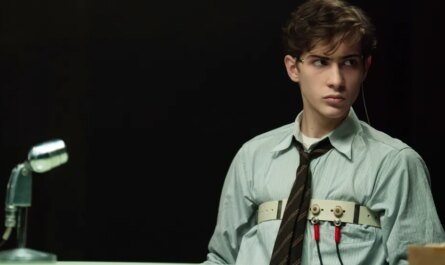
Right here embodying a strong-and-silent persona, essential to a movie that’s intelligently alive to totally different aspects of masculinity and the way they assist each other, Hardwicke performs Beau, a twentysomething Irishman who years in the past fled the nation the place his very identification was unlawful. The yr is 1988, and London remains to be a refuge for all method of queer males who needed to depart house to return house, so to talk. These embody Maurice (Rupert Everett), the growing older proprietor of the shabby café the place Beau works, who sees himself as a nurturing “auntie” for numerous waifs and strays in the neighborhood; amongst these strays, in the meantime, is Tiny (Jack Wolfe, Netflix’s “Shadow and Bone”), a directionless, barely-of-age hustler whom Beau, in flip, regularly takes below his wing.
A mattress for the night time grows right into a roommate state of affairs; there’s no spark of romance between the 2 males however a deeper, extra empathetic sort of love, and when Tiny is identified with AIDS, Beau feels a specific obligation of care to him. However Tiny, eternally prone to addictions and flirtations, is difficult to carry down, and when he ultimately stops coming house, the town’s homosexual bars, golf equipment and cruising grounds meld right into a ceaselessly looping, irritating maze, rife with shadows to enfold anybody who needs to vanish. Beau’s seek for Tiny can be, in a way, an inevitable pursuit of his personal fears; clear delineations of previous and current, or actuality and reverie, blur as “Ancestors” generally segues into heady dreamscapes.
Not each swerve is profitable. A recurring fantasy sees Beau conversing with Gloria (Christina Hendricks) — one in every of a number of golden-age Hollywood sirens adorning Maurice’s living-room wall, re-envisioned as a wonderful ferrywoman of queer souls to their very own afterlife. Shot in satiny monochrome, in distinction to the grainy, muddied, neon-flecked pastels wherein DP Patrick Jordan bathes the movie’s waking motion, these sequences really feel a heavy-handed contrivance in a movie in any other case so delicate, and never clearly born of Beau’s personal creativeness. Hardwicke’s efficiency, in the meantime, is so beautiful, and so particular — the character’s vulnerabilities brimming oh so near his placidly macho floor, his rangy physicality slowly crumpling as time and hope go by — that we really feel we all know his creativeness pretty effectively.
However any such miscalculations are forgivable in a movie that in any other case finds such wealthy and ingenious figurative language, each verbal and visible, for an oft-documented chapter of queer historical past. In some ways, “Ancestors” truly performs as a sinuous, intuitive counterpart to fellow fall competition premiere “Elsinore,” about actor Ian Charleson’s reckoning together with his AIDS prognosis in a lot the identical patch of London, patrolled in each movies by wimple-wearing activists the Sisters of Perpetual Indulgence; it’s not exhausting to think about Beau brushing shoulders with Charleson at some bar or different. Which isn’t to place these two movies, with their contrasting approaches and audiences, in opposition to one another — recognizing kinship between queer individuals and properties may be very a lot the purpose of Turpin’s soaringly formidable, eminently open-hearted debut.