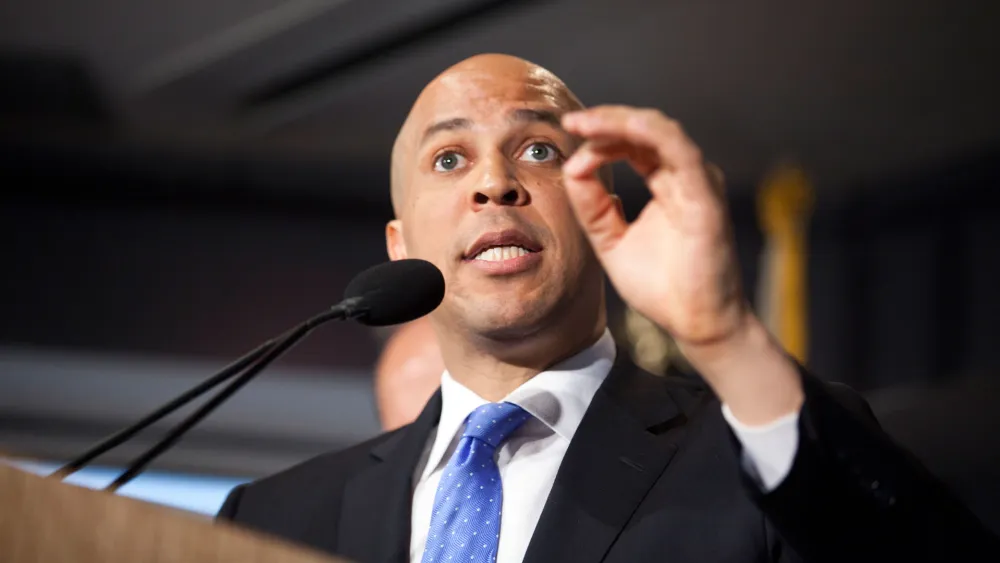
Paramount and a coalition of 12 state attorneys basic defended their antitrust settlement on Monday from a collection of criticisms raised final week by New Jersey Sen. Cory Booker.
In separate filings, the 2 sides argued that the deal was vigorously negotiated, has “tooth,” and shouldn’t be subjected to an impartial “public curiosity” evaluate. Paramount argued that the deal resolves the state’s major concern of a discount in theatrical releases after it merges with Warner Bros. Discovery.
“The proposed consent decree eliminates that threat of post-merger output reductions,” Paramount’s legal professionals wrote, including that the deal “offers certainty for exhibitors and the broader business: a assured, enforceable pipeline of latest releases yearly.”
Booker wrote to object to the deal final Thursday, arguing that the phrases don’t go far sufficient to treatment the anticompetitive harms from the merger. Amongst different considerations, Booker famous that the consent decree expires after solely 5 years, leaving no protections in anyway in yr six.
Paramount argued that the five-year time period was an inexpensive consequence, given the fast-changing nature of the movie and TV enterprise.
“Not one of the events know what client demand will appear to be six years from now or how competitors will change within the intervening years on this dynamic business,” Paramount’s legal professionals wrote. “Actually, implementing a time period any longer may hamper the Mixed Entity’s skill to compete sooner or later due to altering client demand or new improvements, which might undermine the aim of the antitrust legal guidelines to keep up and improve competitors.”
The state attorneys basic likewise defended the deal, together with the five-year time period.
“The events bargained for a five-year time period,” they wrote. “It displays a stability between preserving current ranges of competitors, requiring further years of oversight, and the potential various of Warner Bros. searching for to merge with a unique competitor.”
Booker additionally raised considerations concerning the “editorial independence board” that will likely be appointed to supervise operations at CNN and CBS Information. He famous that editorial points weren’t a part of the states’ criticism, and that the board’s independence is restricted, provided that Paramount will appoint the members.
“The Board was structured to be as self-executing and environment friendly as practicable as a way to guarantee independence and keep away from any claims associated to government-control of the Board,” wrote Paramount’s attorneys.
The states likewise argued that the board doesn’t increase First Modification considerations, arguing that the deal is not going to put the court docket within the place of adjudicating information judgments.
“The Decree defines the Board’s construction, not its speech, and editorial ideas established by the Board will replicate personal conduct,” the states argued.
Decide Araceli Martinez-Olguin ordered the events final week to answer Booker’s letter. The court docket additionally acquired amicus briefs from members of the Block the Merger coalition and from the League of United Latin American Residents, each of which raised a collection of objections to the deal.
Martinez-Olguin has but to log off on the consent decree, and mentioned final week that she would subject a ruling in “due course.”